Free on-site quotes across Mansfield and North Texas · Mon to Sat, 9 AM to 7 PM
New sod laid in fall still needs steady care to root before winter. Keep it moist for the first two weeks, with up to 1.5 inches of water per week, watering before the day heats up and not in the evening. Start mowing once a lifted corner shows light resistance, usually after 2 to 3 weeks, and the grass reaches three inches. Use a starter fertilizer with nitrogen, phosphorus and potassium, avoid high-nitrogen and weed-and-feed products, and roll the sod right after installation. Below 40°F, reduce watering but do not stop.
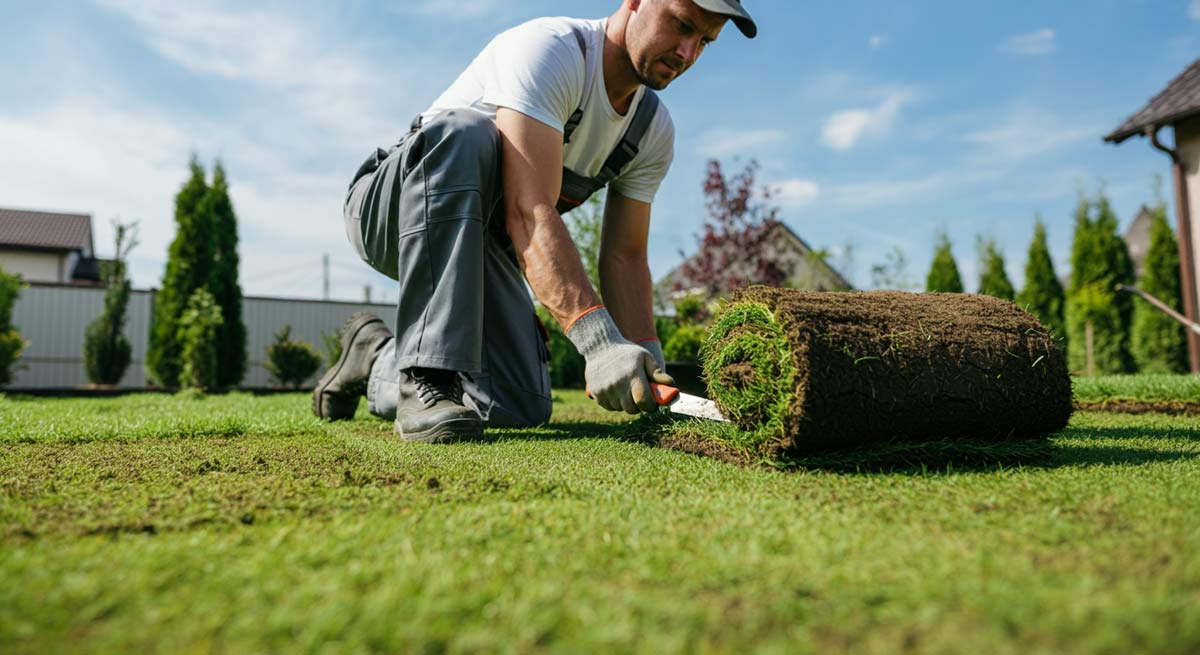
Do you feel like putting down new sod during the fall months? Be careful about your approach. Some rainfall and the cooler temperatures will stop it from drying early. It is still important to focus on maintenance, or else it will dry out, and wither before the arrival of winter. Be careful about things like mowing frequency and watering schedules, and make sure the sprinkler system is working well.
New sod has shallow roots, sitting on the top layer of the soil. The edges can curl if it dries out.
You should keep it moist for the initial two weeks. Usually, fall sod needs up to 1.5 inches of water per week. If you find the temperature quite high, tweak the watering frequency a bit. If you are using a fixed spray nozzle, check its run time. Rotary nozzles help release water slowly.
So, what is the best practice? Water the sod before the daytime temperature gets high. Avoid evening watering, as that can cause fungal growth. If the sod feels somewhat squishy, you are overwatering. Dry edges indicate you need to water it more.
To mow new sod successfully, you must focus on timing. Mowing it too early may slow down root growth. If you wait too long, grass blades become taller than normal, leading to improper sunlight distribution.
You have to check its root system carefully. Lift a corner and check for resistance. Light resistance indicates proper root anchoring. It usually takes 2 to 3 weeks. As the grass reaches three inches, start mowing. This will ensure proper cutting.
The answer is yes, but avoid using a high-nitrogen fertilizer. Excess nitrogen will hamper root growth. Choose a starter fertilizer with a good mix of potassium, phosphorus, and nitrogen. Potassium helps the sod cope with cold, which is necessary in the winter days. Avoid using weed-and-feed solutions as such herbicides can be hard on growing sod.
Not everyone does this, but do not skip it. Use a lawn roller just after installation, as it boosts soil contact and dissolves air pockets. This helps the sod roots grow quickly. For areas drying out faster, try using a roller half-filled with water.
When the sod is not deeply rooted, winter frost can wreak havoc. If the temperature drops below 40°F, reduce watering. However, do not stop watering completely. The roots must remain slightly moist until the outside temperature reaches freezing.
Additionally, make sure the sod is not exposed to heavy foot traffic. Frozen grass blades can get damaged easily, delaying recovery.
So, you can see that looking after new sod in the fall is not difficult. Just make sure you balance watering, mowing, and fertilizing. You want to avoid a lawn full of thin, patchy grass! Also, check your sprinkler system’s performance for proper sod development. Once the sod establishes strong roots, you will have a healthy, lush lawn by spring.
Balance watering, mowing and fertilizing and keep the sprinkler system working, and fall sod should become a healthy lawn by spring.
Family-run sod installation based in Mansfield, TX. 10+ years, 500+ happy homeowners and a 4.7-star Google rating.
© 2026 Texas Sod Zilla. All rights reserved. · Mon to Sat, 9:00 AM to 7:00 PM
Website designed by WebsiteDesignfor99