Free on-site quotes across Mansfield and North Texas · Mon to Sat, 9 AM to 7 PM
Sod gives Texas homeowners a finished lawn the day it goes down, and because its roots are already grown it copes with summer heat better in the first weeks. Seeding costs less upfront, but it only works in a short warm-soil window, takes weeks to fill in, and needs more watering and patience. Choose sod for fast coverage, slopes, or St. Augustine (which is grown from sod or plugs, not seed). Choose seed if budget matters most and you can wait a season.
| Sod | Seed | |
|---|---|---|
| Coverage | Instant, finished look on day one | Weeks to months to fill in |
| Upfront cost | Higher | Lower |
| Texas timing | Most of the year with proper watering | Short warm-soil window |
| First weeks | Frequent watering | Steady moisture, then first mowing |
| Slopes and erosion | Holds soil right away | Seed can wash out |
| Weeds | Crowds weeds out sooner | Bare soil invites weeds |
Texas lawns face long summers, sudden rain and high soil temperatures, and prolonged heat dries soil out fast. Start by looking at the state of your yard, then decide how sod or seed would cope with it.
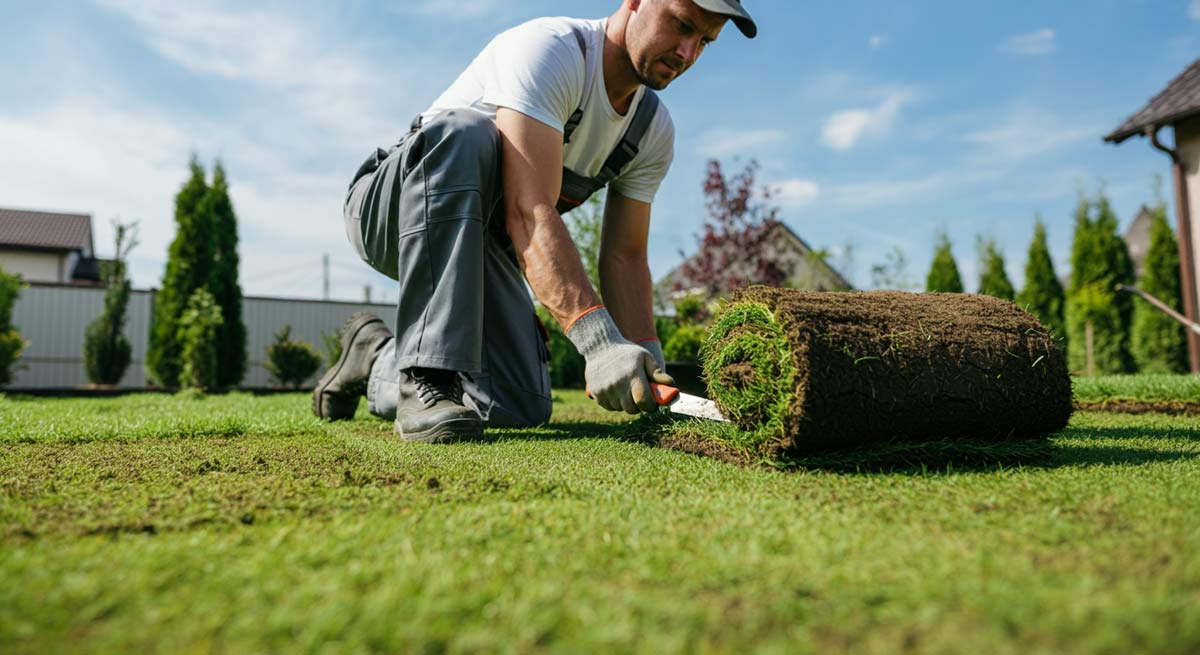
Sod is mature grass grown elsewhere and delivered in rolls with the roots and soil attached. Laid properly, it gives a natural, finished look right away, which is why it is a favorite with Texas homeowners.
Because the roots are already developed, sod has a survival advantage in harsh Texas conditions. It needs steady watering, sunlight and care to knit into a full lawn.
Seeding means spreading seed over prepared soil and waiting for it to germinate. Timing, soil moisture and temperature all have to line up, and in Texas that window is small. After it sprouts, the new grass needs extra care to stay nourished.
Look past the upfront price. Sod costs more on day one, but seeding adds costs of its own: reseeding bare patches, extra watering and more maintenance while the lawn establishes.
Sod gives instant coverage. A seeded lawn takes time to grow in and even out. If you need the yard looking good soon, that difference matters.
The first few weeks are critical either way. Sod needs regular watering; a seeded lawn needs consistent moisture and its first mowing once the grass reaches height. Long term, both need ongoing care.
Pick the option that fits your yard, your timeline and your budget. For most Texas homeowners who want a lawn that looks finished and survives its first summer, sod is the safer bet.
Family-run sod installation based in Mansfield, TX. 10+ years, 500+ happy homeowners and a 4.7-star Google rating.
© 2026 Texas Sod Zilla. All rights reserved. · Mon to Sat, 9:00 AM to 7:00 PM
Website designed by WebsiteDesignfor99